Tag Archives for " cancers "

Food Addiction & How to Break it – Simple system

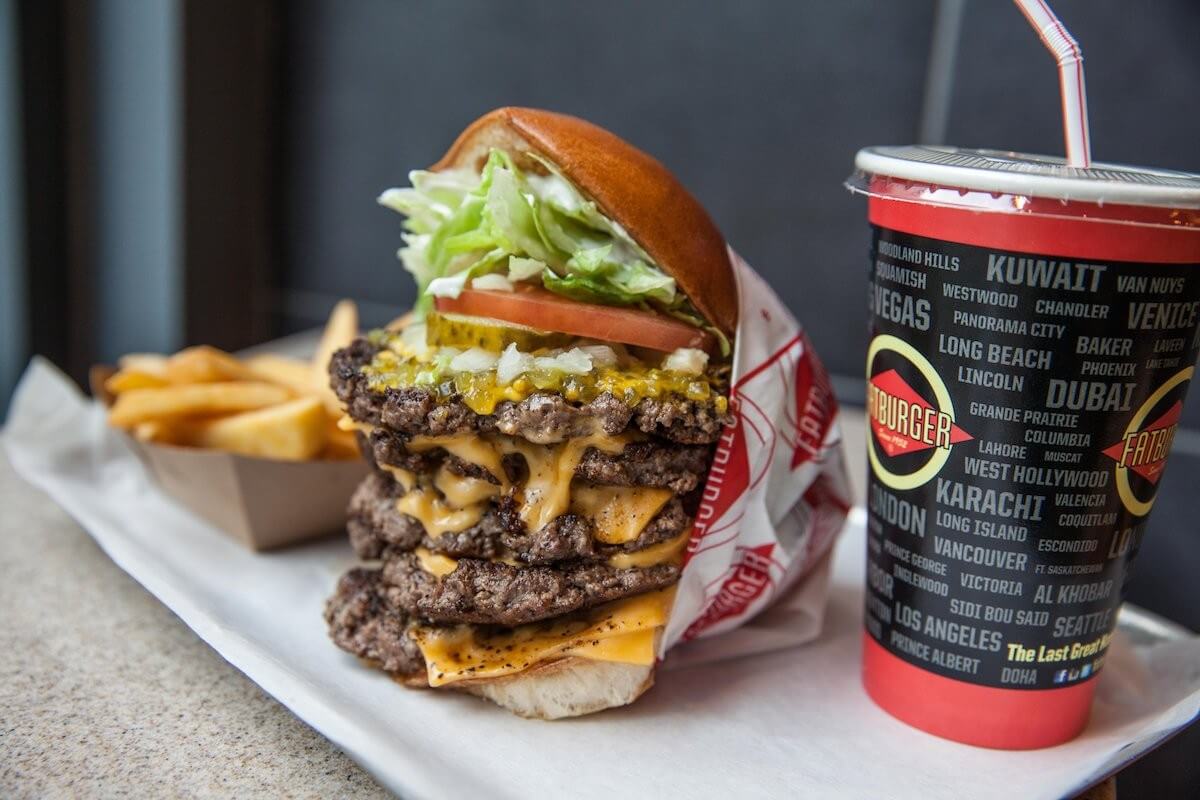
Food Addiction causes with oversized fatty burger and soft drink

Food addiction isn't all your fault

Does your food addiction start like this?

It’s been a hard day at work and you just want to relax. You get home put on Netflix and open that bag of crisps, chips or sweets. One bite turns into one hundred and you’re left with an empty packet on your lap with you trying to blame the dog.

Don’t worry, this happens to the best of us, and it isn’t actually that uncommon with certain foods. Processed foods are scientifically engineered to be irresistible and easy to gobble up in large quantities. If you can’t stop, the chips are doing their job. Some brands even have that as a catchphrase.

The big issue here is that we become addicted to the mouth feeling and the temporary feel good of eating these foods. A lot of us feel the regret after eating these and still go back to them later in the day or the next day.

So what can you do to control this?

1. GET CURIOUS ABOUT YOUR FOOD

For a food to be “easy to eat”, it has to be: broken down easily (less chewing), and low volume (doesn’t take up much physical space). The more we have to chew something, the longer it takes us to eat, giving our fullness signals a chance to catch up.

That feeling of “fullness” matters a lot too.

When you eat, your stomach expands. It’s partly through that sensation of pressure that your body knows you’ve had enough. Processed foods deliver a lot of calories without taking up much space, meaning you can eat a lot before you realize you’ve overdone it.

Count your chews.

Note: Don’t do this forever. That would be weird. Just try it.

First, eat a whole food — a vegetable, fruit, whole grain, lean protein, whatever — and count how many chews you take per mouthful.

How long does it take to eat an entire portion of that food?

How satisfied do you feel afterward?

Do you want to eat more?

Then, next time you eat junk food, count how many chews you take per mouthful.

How long does it take to eat that serving of crisps, chips, or cookies?

How satiated do you feel afterward? Do you want to eat more?

Make some comparisons and notice the differences. Contrast how long eating each of these foods takes you, how satiated you feel after eating each of them, and how much you want to keep eating.

How will you use that information to make food choices moving forward?

2. WHAT MESSAGES ARE YOU GETTING ABOUT THE FOOD YOU ARE EATING

Food manufacturers use marketing strategies to imply processed foods are healthy. And even if you know they’re not, they have other ways of getting you to buy them.

The good news? Simply being aware of this trick can help you bypass it.

Evaluate your pantry.

Examine the foods you have in your home and the messages you’ve been given about them by the manufacturer.

Note: Keep in mind that this is a mindful awareness activity. You’re not doing this to judge yourself or feel shame about the food choices you’ve made. Look at your pantry with curious and more informed eyes.

Step 1: Look for “health halo” foods. Do you have any? If so, why did you choose them? Was it the language used to describe it? Was it the packaging? A trendy “superfood” ingredient? Is it organic, gluten-free, sugar-free, Paleo, or something else?

Step 2: Read the nutritional information. Once you’ve identified the “health halo” foods, take a closer look. Is your “healthy” organic dark chocolate peanut butter cup all that nutritionally different from that mass-market peanut butter cup? Chances are, it’s just different packaging.

Step 3: Count how many varieties of junk foods you have. If you love ice cream — how many flavours do you have? If you peek into your cupboards, are there cookies, popcorn, candy, or crisps/ chips? Without judgment, count the total junk food variety currently in your
home. Generally, the more options you have, the easier it is to overeat.

The takeaway?

You’ll be more aware of the particular types of marketing you’re susceptible to, which you can use to make more informed food choices.
You’ll also have a better idea of which treat foods you prefer, and by reducing the variety of them in your home, you’ll cut down on opportunities to overeat.

3. EATING PATTERNS TURN INTO HABITS

We often use food for reasons other than physical nourishment.

Hard day, let’s have a takeaway. Temporarily, we feel better because of the mouth pleasure.

The next time we have a hard day, we remember the temporary and we repeat the ritual. If we continue to repeat this cycle, we may find ourselves slipping every time we feel blue.

We’re not even thinking about it at this point; it’s just habit. It is this habit that becomes a food addiction.

Habits are powerful, for better or for worse. They can work for us or against us.

Luckily, we have control over this.

All it takes is a little time and an understanding of how habits get formed.

All animals learn habits in the following way –

Trigger (Something Happens) > Behaviour > Reward.

PUT HABITS TO WORK

Identify your triggers - they are what is driving your food addiction:

  • Feeling. We might eat more when we’re stressed, lonely, or bored. Food fills the void.
  • Time of day. We always have a cookie at 11am, or a fizzy juice at 3pm. It’s just part of
    our routine.
  • Thought pattern. Thinking “I deserve this” or “Life is too hard to chew kale” might
    steer us toward the drive-thru window.
  • Place. For some reason, a dark movie theater or our parents’ kitchen might make us want
    to munch.

  • Social setting. But everyone else is having beer and chicken wings, so might as well
    join the happy hour!


CHANGING YOUR HABITS TO AVOID FOOD ADDICTION

When you find yourself eating when you’re not physically hungry, increase your awareness of your triggers by asking yourself:

What am I feeling?

What time is it?

Who am I with?

Where am I?

What thoughts am I having?

Find a new behaviour every time you feel these triggers. These must be individual to you for them to be effective.

The road to a better lifestyle is takes more than just your nutrition. However, the skills and habits required to control your nutrition makes the rest of the journey far easier.

Give these a try and let us know how you get on and how you feel they can be improved.

Share your experiences below in the comments.

The really big problem with Food Addiction is that a a lot of the ingredients that the food manufacturers use cause Cancer. So in addition to becoming your drug pusher of choice they are making you sick. Eventually your addiction is likely to kill you unless you make the changes to your eating habits.

Become a member of our Destroy Disease group and take advantage of our Free 7 Day Health Kickstarter  to help you break your Food Addiction and become a healthier you.

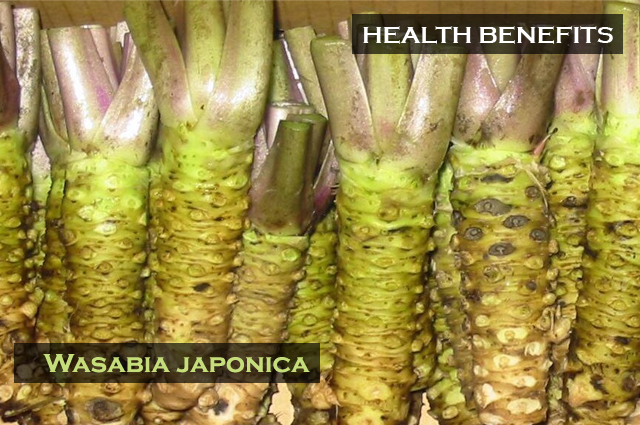
The most potent Cancer Killing Plant is Wasabia japonica - Wasabi.

But not the stuff you normally get with your Sushi. That is normally a mix of horseradish, mustard and artificial colouring.

I am talking about the real stuff - it is a plant and doesn't require anything else to be added to make it taste the way it does. It also naturally contains the highest amount of cancer killing ingredients yet  found in the plant work. Here is more information about this amazing plant.

For those of you do not like the taste of Wasabi then there are supplements available. The ones we recommend is the SAWA brand which does not contain any additives or fillers of any kind. They are 100% Pure Wasabia japonica rhizome powder in a vegetarian capsule.
Buy your Sawa capsules here and help support this website.

All Capsules contain Sawa 100% Pure Wasabia japonica freeze dried rhizome powder. No additives of any kind.

Recommended dosage is 1 - 3 capsules daily with food at breakfast.

Eat more Wasabi

Six Reasons Why You Should Eat More Wasabi

Whether you've been out for sushi or browsing the international aisles at your grocery store, you might have noticed a green paste or powder called wasabi.

Wasabia is a spicy green Japanese condiment that was originally made from the herb Wasabia japonica. Wasabia japonica rhizome is a rich source of unique long-chain methyl isothiocyanates that have been shown to help maintain healthy liver enzymes and DNA, as well as support a healthy anti inflammatory process.

Why else should you be eating more wasabi?

Listen in as the Wasabi Maestro (Michel Van Mellaerts) shares the powerful benefits of wasabi and why you should be eating more of this food.

In the following article I shall call the authentic plant product Wasabia, and the fake product wasabi.

Let's talk about why we all should be eating more Wasabia. You know, that green paste you get with sushi. Although that paste you get with sushi in restaurants and sushi bars is probably not Actual Wasabia and I will get into that in a moment. That small amount of green paste that clears your sinuses, gives you that real kick and wake up call, your eyes water and then it's gone and you just feel awesome. I love it. We should be eating more Wasabia. Let me just tell you about Wasabia. Let's discuss the Wasabia japonica story because that's the plant name. Wasabia japonica has been grown and eaten in Japan for centuries. It is believed that the daily consumption of this plant Wasabia japonica improves the health and fights off a large number of illnesses.

This has now been borne out in a large and increasing number of scientific studies on the actions of these naturally occurring compounds in Wasabia. For centuries, there have been a lot of traditional uses of Wasabia, a lot of anecdotal evidence, historical evidence, even folklore, surrounding Wasabia and its medicinal properties.

More and more scientists are starting to back up what traditional users of Wasabia have always known: it's good for you.

More and more people are seeing Wasabia as a functional food for human health--consuming it on a daily basis. Let me just tell you the problem, though. At least in the United States, when you think you are eating the wasabi plant, we are probably not. Wasabia is hard to grow and cultivate mainly because it has to be done at higher elevations.

Of course, in higher elevations the temperature can change so much and if it gets too warm the wasabi plant doesn't do too well and if it gets too cold it doesn't do well. So, there's this right elevation, this perfect elevation, where it's not too cold and not too warm in the mountains of Japan. Yet people don't want to go up there and cultivate the plant anymore. Then you add to the fact that there's so much pollution in Japan and the bottom line is the actual plant Wasabia japonica is not really grown that much anymore because it's just too hard and no one wants to do it.

Here's what the Japanese did, knowing that there was going to be a massive demand in Western countries for the unique flavour of Wasabi.

The Japanese have a great business eye for this kind of thing. In order to make up for the reduction in Actual Wasabia, the Japanese food industry provided a solution. They took powder or paste that contains European horseradish mixed with mustard seed and FDA approved coloring. So, that green stuff that you thought was wasabi that you are getting with your Westernised sushi is horseradish with food coloring in it and maybe a little mustard seed. And it's really not providing that much benefit.

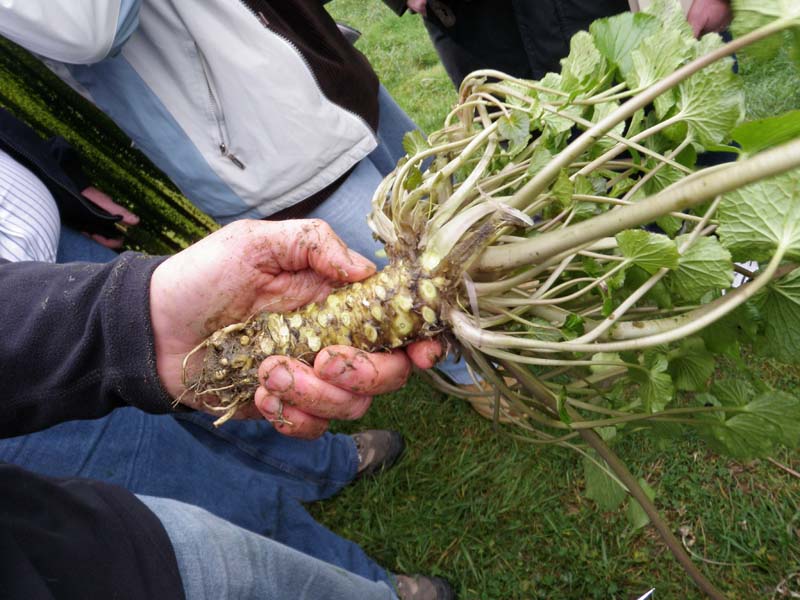
Horseradish does have some benefits but not to the level of Wasabia. So, when you think you are eating wasabi in all countries in the world, you probably aren't. You can get it but you have to ask for it. It's going to cost a little bit more but it's worth it. When you look at the Wasabia plant, the most important part of it is the swollen stem (rhizome). There's a specific type of compound in the rhizome called an isothiocyanate. That's the key compound that we want from the Wasabia.

I did some research after learning about Wasabia and learning about how hard it is to grow the plant and cultivate it and then learning about how the Japanese have a kind of work-around with horseradish, I decided I'm going to do some straight forward, good, old-fashioned research on PubMed to find out what the true benefits of Wasabia that contain these unique isothiocyanate [Iso-thio-cy-an-ates] compounds are.

Wasabi rhizome after hair root removal before cleaning

Here's what I found.

Number one

Actual Wasabia with isothiocyanates inhibits the development of lung tumors, at least in mice. There are a lot of cancer researchers who are now are pushing the NIH to do some human clinical trials with Wasabia standardized to a fixed level of isothiocyanate.

This was published in Cancer Letters 2000. There hasn't been much follow up with this, I don't think. If you go to clinicaltrials.gov, you can search "wasabi" and/or "isothiocyanate" and "lung cancer" and see what kind of trials are out there. I don't think there are too many. The use of Wasabia to cure Lung Cancer has been shown to work, at least in mouse models.

The latest studies (2019) are showing that the active ingredients in Wasabia japonica kill nearly all types of Cancer cells. I shall be addressing these cancers in future articles. 

Number two

Actual Wasabia has potent antibacterial activity. Now, this has been known for a long time and this has probably been one of the big reasons that traditional cultures have used actual Wasabia in wounds and when people are sick with cold, flu, whatever.

Historically speaking, they made the claims it works wonders but now there is some research evidence that it truly does have at least antibacterial activity and is also anti-viral. The International Journal of Food and Medicine, 2004 did a really good study on this. The Biological Sciences and Biotechnology Biochemistry journal, published in 1998 some research looking at the antibacterial activity and it does seem to have some.

Some hospitals are now using Wasabia based cleaning products to overcome Golden Staph infections are appear to be endemic in most hospitals.

Number three

Actual Wasabia suppresses glandular stomach cancer.

This is a good one. We don't have a lot of good treatments for stomach cancer. This study was published in Nutrition and Cancer, 1991.

Looking at actual Wasabia with isothiocyanates and the effect on cancer was positive and the results published in a peer review journal a long time ago. Again, go to clinicaltrials.gov and there's not a lot of follow up with these things and that's a shame.

Number four

Wasabia has some antiplatelet properties so it can help work in kind of the same way aspirin does. A study has shown that Wasabia works almost immediately compared to the 10 minutes that aspirin normally takes to reduce pain.

Wasabia japonica rhizomes after cleaning and ready for processing or eating

In a post-stroke type situation or maybe even used in combination with other anti-platelets with people with A-fib to prevent blood clot formations Wasabia would be useful. This was shown to be true in a study that was published in the Biofactors journal in 2000.

There's a number of traditional benefits of Wasabia, a lot of historical, anecdotal claims about Wasabia and those claims are now being backed up with solid, peer reviewed publications, sometimes in animals, sometimes in a petri dish, sometimes in humans.

Number five

Wasabia increases the abundance of protective detox enzymes. Those are your liver enzymes. Detox is a big issue.

We know that we have a built in, really awesome detox system called the liver. But the liver is being overwhelmed in today's environment, so it needs help. Wasabia can be that help.

The Journal of Biology and Chemistry, in 2002 showed that Wasabia can enhance the activity of phase I and phase II detoxification paths in the liver. Other things that can do that are milk thistle, melon extracts, B Vitamins and now you can add Wasabia to that list.

Number six

Wasabia has a protective effect against colon cancer risk.

This study was published in Nutrition and Cancer in 2004. Just a lot of really good benefits of Wasabia but you have to make sure you're using Actual Wasabia japonica if you are going to eat and consume it.

The latest studies show that Wasabia japonica is actually capable of killing almost every type of cancer. 

If you are going to buy a product make sure it is only Actual Wasabia and not the generally available horseradish blend.

Here are some products that do contain 100% Pure Wasabia japonica rhizome with no additives of any type. These products contain a very high level of the active ingredients that studies have shown kill cancers and maintain a healthy body.

100% Pure Wasabia japonica products that have the health benefits mentioned above can be found at https://organicremedies.com/products
>