Tag Archives for " wasabia japonica "

Prostate Cancer can be dealt with simply.

Selenium kills Prostate Cancer

Risk of prostate cancer

About 1 man in 9 will be diagnosed with Prostate Cancer during his lifetime. Prostate cancer develops mainly in older men. About 60% are diagnosed in men aged 65 or older, and it is rare before age 40. The average age at the time of diagnosis is about 66.

As a preventative the consumption of one or two brazil nuts a day is a minimal requirement compared to the potential of Prostate Cancer as you get older. If you are allergic to nuts then there are Selenium supplements you can take. So do one or the other from as early an age as possible.

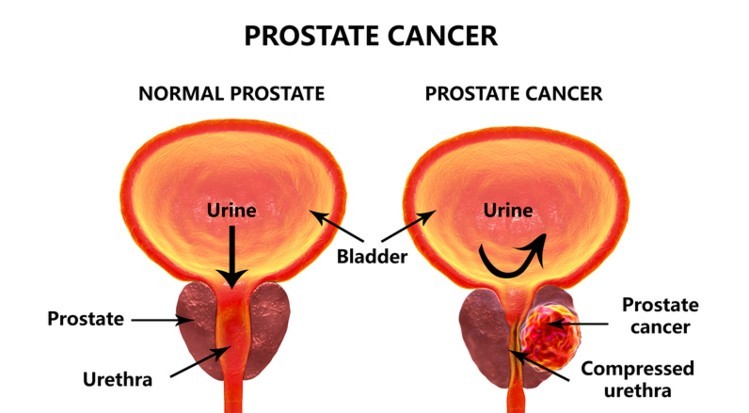
Prostate cancer affects men. This small gland is located beneath the bladder and in front of the rectum. It is actually part of the reproductive system and helps to make the fluid that is known as semen. Semen is needed to carry sperm, so a healthy prostate is needed for proper ejaculation and fertility. Prostate Cancer occurs when the prostate gets larger.

As men get older it is natural for some enlargement of this gland to occur. However, in some cases, this can be a sign of very serious Prostate Cancer. This type of Cancer can make urination and ejaculation painful or difficult, and can greatly affect reproductive and sexual wellbeing. But asides from complications and pain, Prostate Cancer can be seriously life-threatening. The pressing issue of Prostate Cancer has led to extensive research on treatment options and preventative measures. In particular, there has been interest in the use of particular vitamins and minerals to naturally prevent and control this form of Cancer.

One mineral that has proven to be particularly important is Selenium. 

In several different medical trials and scientific studies, it has been found that low levels of Selenium in the body can lead to a lesser risk of Prostate Cancer. In particular, it is known that this important mineral can actively defend the body against the development of Prostate Cancer.

This is because it can support the effects of antioxidants in the body. Antioxidants prevent oxidative stress from occurring in the body. When oxidative stress builds up it can lead to Cancer. So it is important to ensure that antioxidants are able to fight this in your body.

Getting enough Selenium optimises the Cancer preventing benefits of antioxidants. Asides from this, it is thought that Selenium can encourage the immune system to destroy tumours.

If you are at risk of Prostate Cancer or are concerned about your future Cancer risks, then it definitely worth ensuring you have enough Selenium in your diet. People with low Selenium intake can reduce their Prostate Cancer risk just by getting more of this essential mineral in their diet. So if you are a man over the age of 50 it is especially worth watching out for Selenium.

Diet for Prostate Cancer

Now that you know how important Selenium is to your health and wellbeing, you may want to know how to include it in your diet.

There is not actually a huge range of foods that contain Selenium. For those who don’t eat meat, dairy or shellfish, there are even fewer food sources. This means that most vegetarians and vegans may struggle to find good food sources of Selenium.

However, the good news is that you don’t need a lot of Selenium in your diet at all. As a trace mineral, you only need a ‘trace’ or a small amount of it in your diet. Even a small portion of Selenium-rich foods could be enough to meet your Recommended Daily Allowance of 55 mcg. Although, if you want to treat health conditions with Selenium then you may want to get a little more Selenium than the RDA suggests, just under 200 mcg.

Meats

Organ and muscle meat are known to be rich in Selenium. The liver is a good option since it is rich in nutrients and healthy enzymes. Although an unusual choice of meat, it tends to be cheaper and offers a unique flavour to meals.

Try swapping traditional cuts of meat for organ meats to increase your Selenium intake. Poultry can be a good source of Selenium although in most cases this is only true of organic and free-range poultry. Fish, eggs, and dairy foods also contain a significant amount of Selenium and can be included every now and then as part of a nutritious and healthy diet.

Plants

With plant foods, most of the Selenium they contain depends on the soil they were grown in. Soil contains Selenium which is absorbed by the plant roots. Depending on the geographical location of growth, the Selenium concentration of plant foods can vary quite a bit. Generally though, if a plant food is considered to be rich in Selenium you can be sure that it has enough to help you meet your RDA.

One of the absolute best sources of Selenium is Brazil nuts. Brazil nuts are certainly the most concentrated plant food when it comes to this trace mineral. Just one Brazil nut provides you with up to 95 mcg of Selenium. This is almost twice an adult’s RDA. In a recent New Zealand study, Brazil nuts were found to be a far more preferable source of Selenium than supplements. If you are not a fan of Brazil nuts, you can also look to walnuts to support your wellbeing.

Including a Selenium rich food like these nuts in your diet regularly should negate the need for any supplement in the first place. Other plant foods that contain a notable amount of Selenium include various cereals and grains, raisins, onions, garlic and kidney beans.

Having a variety of these Selenium-rich foods in your diet can help you to meet your daily needs for this trace mineral. Asides from this, it can certainly help you to support long term health and wellbeing. Whether you want to prevent Cancer or support cognitive (brain) health, you can rely on this mineral to help you.

The most potent Prostate Cancer Killing Plant is Wasabia japonica - Wasabi.

But not the stuff you normally get with your Sushi. That is normally a mix of horseradish, mustard and artificial colouring.

I am talking about the real stuff - it is a plant and doesn't require anything else to be added to make it taste the way it does. It also naturally contains the highest amount of cancer killing ingredients yet  found in the plant work. Here is more information about this amazing plant.

For those of you do not like the taste of Wasabi then there are supplements available. The ones we recommend is the SAWA brand which does not contain any additives or fillers of any kind. They are 100% Pure Wasabia japonica rhizome powder in a vegetarian capsule.
Buy your Sawa capsules here and help support this website.

All Capsules contain Sawa 100% Pure Wasabia japonica freeze dried rhizome powder. No additives of any kind.

Recommended dosage is 1 - 3 capsules daily with food at breakfast.

Eat more Wasabi

Six Reasons Why You Should Eat More Wasabi

Whether you've been out for sushi or browsing the international aisles at your grocery store, you might have noticed a green paste or powder called wasabi.

Wasabia is a spicy green Japanese condiment that was originally made from the herb Wasabia japonica. Wasabia japonica rhizome is a rich source of unique long-chain methyl isothiocyanates that have been shown to help maintain healthy liver enzymes and DNA, as well as support a healthy anti inflammatory process.

Why else should you be eating more wasabi?

Listen in as the Wasabi Maestro (Michel Van Mellaerts) shares the powerful benefits of wasabi and why you should be eating more of this food.

In the following article I shall call the authentic plant product Wasabia, and the fake product wasabi.

Let's talk about why we all should be eating more Wasabia. You know, that green paste you get with sushi. Although that paste you get with sushi in restaurants and sushi bars is probably not Actual Wasabia and I will get into that in a moment. That small amount of green paste that clears your sinuses, gives you that real kick and wake up call, your eyes water and then it's gone and you just feel awesome. I love it. We should be eating more Wasabia. Let me just tell you about Wasabia. Let's discuss the Wasabia japonica story because that's the plant name. Wasabia japonica has been grown and eaten in Japan for centuries. It is believed that the daily consumption of this plant Wasabia japonica improves the health and fights off a large number of illnesses.

This has now been borne out in a large and increasing number of scientific studies on the actions of these naturally occurring compounds in Wasabia. For centuries, there have been a lot of traditional uses of Wasabia, a lot of anecdotal evidence, historical evidence, even folklore, surrounding Wasabia and its medicinal properties.

More and more scientists are starting to back up what traditional users of Wasabia have always known: it's good for you.

More and more people are seeing Wasabia as a functional food for human health--consuming it on a daily basis. Let me just tell you the problem, though. At least in the United States, when you think you are eating the wasabi plant, we are probably not. Wasabia is hard to grow and cultivate mainly because it has to be done at higher elevations.

Of course, in higher elevations the temperature can change so much and if it gets too warm the wasabi plant doesn't do too well and if it gets too cold it doesn't do well. So, there's this right elevation, this perfect elevation, where it's not too cold and not too warm in the mountains of Japan. Yet people don't want to go up there and cultivate the plant anymore. Then you add to the fact that there's so much pollution in Japan and the bottom line is the actual plant Wasabia japonica is not really grown that much anymore because it's just too hard and no one wants to do it.

Here's what the Japanese did, knowing that there was going to be a massive demand in Western countries for the unique flavour of Wasabi.

The Japanese have a great business eye for this kind of thing. In order to make up for the reduction in Actual Wasabia, the Japanese food industry provided a solution. They took powder or paste that contains European horseradish mixed with mustard seed and FDA approved coloring. So, that green stuff that you thought was wasabi that you are getting with your Westernised sushi is horseradish with food coloring in it and maybe a little mustard seed. And it's really not providing that much benefit.

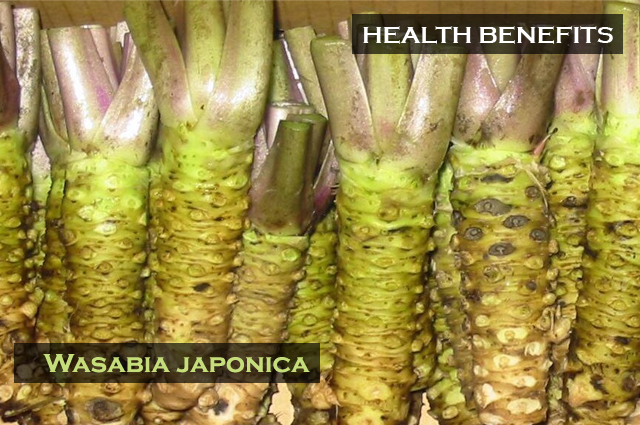
Horseradish does have some benefits but not to the level of Wasabia. So, when you think you are eating wasabi in all countries in the world, you probably aren't. You can get it but you have to ask for it. It's going to cost a little bit more but it's worth it. When you look at the Wasabia plant, the most important part of it is the swollen stem (rhizome). There's a specific type of compound in the rhizome called an isothiocyanate. That's the key compound that we want from the Wasabia.

I did some research after learning about Wasabia and learning about how hard it is to grow the plant and cultivate it and then learning about how the Japanese have a kind of work-around with horseradish, I decided I'm going to do some straight forward, good, old-fashioned research on PubMed to find out what the true benefits of Wasabia that contain these unique isothiocyanate [Iso-thio-cy-an-ates] compounds are.

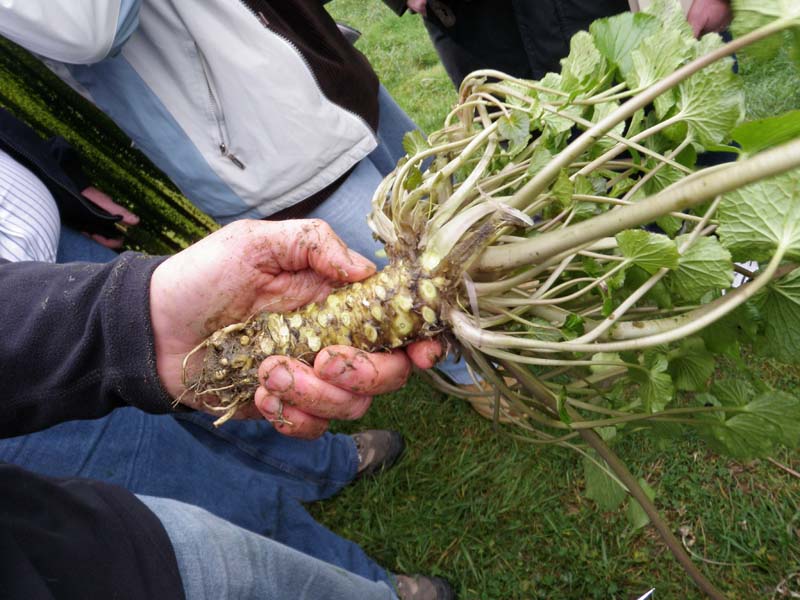
Wasabi rhizome after hair root removal before cleaning

Here's what I found.

Number one

Actual Wasabia with isothiocyanates inhibits the development of lung tumors, at least in mice. There are a lot of cancer researchers who are now are pushing the NIH to do some human clinical trials with Wasabia standardized to a fixed level of isothiocyanate.

This was published in Cancer Letters 2000. There hasn't been much follow up with this, I don't think. If you go to clinicaltrials.gov, you can search "wasabi" and/or "isothiocyanate" and "lung cancer" and see what kind of trials are out there. I don't think there are too many. The use of Wasabia to cure Lung Cancer has been shown to work, at least in mouse models.

The latest studies (2019) are showing that the active ingredients in Wasabia japonica kill nearly all types of Cancer cells. I shall be addressing these cancers in future articles. 

Number two

Actual Wasabia has potent antibacterial activity. Now, this has been known for a long time and this has probably been one of the big reasons that traditional cultures have used actual Wasabia in wounds and when people are sick with cold, flu, whatever.

Historically speaking, they made the claims it works wonders but now there is some research evidence that it truly does have at least antibacterial activity and is also anti-viral. The International Journal of Food and Medicine, 2004 did a really good study on this. The Biological Sciences and Biotechnology Biochemistry journal, published in 1998 some research looking at the antibacterial activity and it does seem to have some.

Some hospitals are now using Wasabia based cleaning products to overcome Golden Staph infections are appear to be endemic in most hospitals.

Number three

Actual Wasabia suppresses glandular stomach cancer.

This is a good one. We don't have a lot of good treatments for stomach cancer. This study was published in Nutrition and Cancer, 1991.

Looking at actual Wasabia with isothiocyanates and the effect on cancer was positive and the results published in a peer review journal a long time ago. Again, go to clinicaltrials.gov and there's not a lot of follow up with these things and that's a shame.

Number four

Wasabia has some antiplatelet properties so it can help work in kind of the same way aspirin does. A study has shown that Wasabia works almost immediately compared to the 10 minutes that aspirin normally takes to reduce pain.

Wasabia japonica rhizomes after cleaning and ready for processing or eating

In a post-stroke type situation or maybe even used in combination with other anti-platelets with people with A-fib to prevent blood clot formations Wasabia would be useful. This was shown to be true in a study that was published in the Biofactors journal in 2000.

There's a number of traditional benefits of Wasabia, a lot of historical, anecdotal claims about Wasabia and those claims are now being backed up with solid, peer reviewed publications, sometimes in animals, sometimes in a petri dish, sometimes in humans.

Number five

Wasabia increases the abundance of protective detox enzymes. Those are your liver enzymes. Detox is a big issue.

We know that we have a built in, really awesome detox system called the liver. But the liver is being overwhelmed in today's environment, so it needs help. Wasabia can be that help.

The Journal of Biology and Chemistry, in 2002 showed that Wasabia can enhance the activity of phase I and phase II detoxification paths in the liver. Other things that can do that are milk thistle, melon extracts, B Vitamins and now you can add Wasabia to that list.

Number six

Wasabia has a protective effect against colon cancer risk.

This study was published in Nutrition and Cancer in 2004. Just a lot of really good benefits of Wasabia but you have to make sure you're using Actual Wasabia japonica if you are going to eat and consume it.

The latest studies show that Wasabia japonica is actually capable of killing almost every type of cancer. 

If you are going to buy a product make sure it is only Actual Wasabia and not the generally available horseradish blend.

Here are some products that do contain 100% Pure Wasabia japonica rhizome with no additives of any type. These products contain a very high level of the active ingredients that studies have shown kill cancers and maintain a healthy body.

100% Pure Wasabia japonica products that have the health benefits mentioned above can be found at https://organicremedies.com/products
>